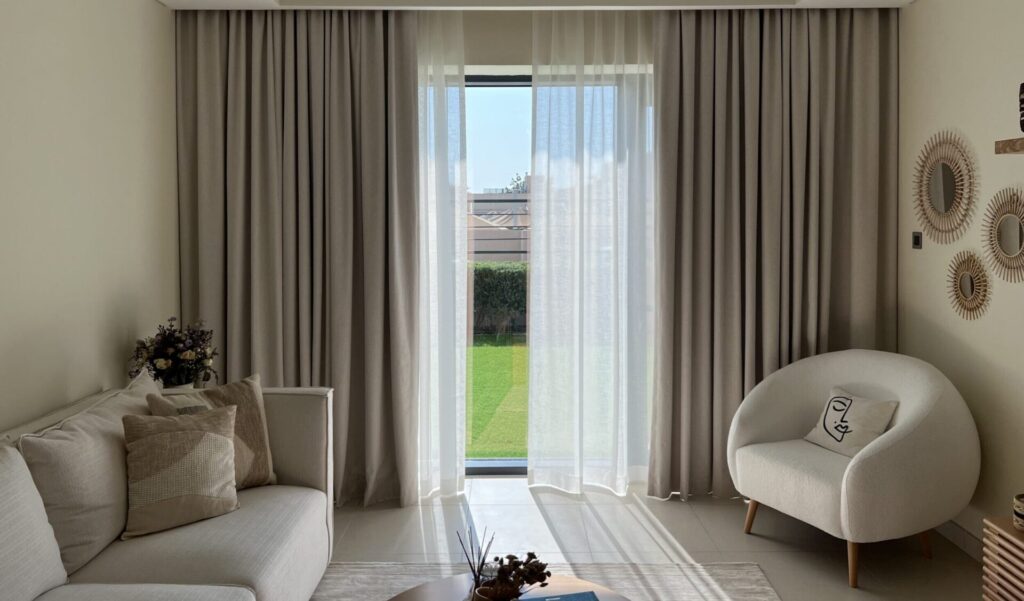
It’s Saturday at 7 a.m., and your two-year-old wakes up because the sunlight is peeking through the thin curtains that are not blocking much light. And your power bills are soaring as the heat leaks through the gaps around your windows during cold winter months. Sound familiar? When you have a family to juggle, the type of curtains you use is more important than you might think.
When it comes to the choice between blackout and standard curtains, it’s not simply a matter of style – it’s about practical window coverings that cater to your family’s needs. Whether you want to keep the bedrooms dark for a good night’s sleep or control the temperature and energy bills, the right curtains can help. But with all the choices available, which type is right for your family?
Here, we explore the differences between blackout and regular curtains in terms of energy and insulation, durability, and maintenance. Whether you’re decorating a bedroom, kitchen, or common area, you’ll find straightforward advice to guide you in making the best decision for your family.
Blackout vs Regular Curtains: Which to Choose
What Are Blackout Curtains?
Blackout curtains are designed to eliminate light and enhance a room’s insulation. They differ from traditional window dressings in that they have multiple layers of fabric – usually a decorative face, a dense core and a closely woven or foam-lined backing. It’s this multi-layered design that helps them to block 90-100% of light, which is why they’re so commonly used in nurseries, bedrooms, and home cinemas.
As well as being light-blocking, the same accordion-like material that blocks light also blocks heat. Blackout curtains block sunlight from entering in summer and retain heat in winter. In regions with harsh climates, many families report they’re able to save on energy costs by switching to blackout curtains.
Home furnishings companies such as Higbedding have developed entire lines of curtains based on this dual function, as parents seek window treatments that are as versatile as they are. For parents with a focus on improving sleep conditions and reducing energy costs, blackout curtains provide a practical option that’s more than just decorative.
What Are Regular Curtains?
Regular curtains focus on aesthetics and light filtration, rather than thermal insulation. Available in a variety of materials – cotton, linen, velvet, and sheer – regular curtains can complement any room decor. Modest light filtering is their compromise: they diffuse direct sunlight while still allowing light into the room, making them perfect for living rooms, dining rooms, and kitchens where daylight is welcome.
When combined with a window valance, regular curtains can enhance room decor without making it feel closed in. But they lack the thermal insulation of blackout curtains, so they won’t be as effective in regulating temperature. Regular curtains are best used in family rooms where you want a warm and decorative look, not necessarily blackout, light control, temperature, or sleep control.
Which Curtains are the Best for Energy Efficiency?
How Insulated Curtains Can Improve Energy Efficiency
Insulated curtains operate on the principle of creating an air gap between the window panes and the interior – effectively insulating the room from temperature fluctuations. The physics is simple: windows are a major vulnerability in a home’s thermal envelope, accounting for as much as 30% of heat loss in U.S. homes, according to the Department of Energy.
Thick, multi-ply curtains are designed to combat this. This is especially noticeable in households with extreme weather conditions, where insulated curtains can help ease the burden on air conditioners and heaters, leading to reduced energy bills. In a child’s room, for instance, keeping the room at a comfortable temperature not only promotes better sleep but also eliminates the necessity of running a heater or air conditioner all night.
Blackout Curtains as Energy Savers
Blackout curtains are far more energy efficient than conventional curtains. Their dense or foam-lined weaves not only prevent light from entering, but also UV rays that heat rooms during those warm afternoons. During the hot months, blackout curtains on south- and west-facing windows can help block out the sun, keeping rooms cooler without relying on air conditioning.
During winter, the dense fabric also acts as insulation, blocking drafts entering through window joints. This is a good feature for cost-conscious parents. Standard curtains, even those made from the heaviest of materials, do not offer the same thickness. If you are saving energy as well as improving your family’s sleep space, blackout curtains offer an alternative to conventional curtain options that can’t be matched.
Selecting the Right Fabrics for Durable Curtains
Enhanced durability becomes a critical consideration for curtains when kids and/or pets are involved. Blackout curtains crafted from polyester or polyester-blend fabrics often stand up better to the wear and tear of everyday life than those made from natural fibers – polyester doesn’t tear or fray easily, retains its shape and flexibility after multiple washes, and is much less prone to colour fading than cotton or linen.
The foam or woven blackout lining that prevents light from getting through also provides an additional layer of strength, doubling up against fraying at the seams and hems. Another consideration is the fabric’s resistance to fading. Open windows on the south side of the house are exposed to constant sunlight, so curtains that fade rapidly look rundown after a year.
UV-resistant treatments or densely woven fabrics that retain colour well are good choices. If you have young children who pull, snatch, and occasionally remove the curtains from their rods, header tape and grommet/pleat construction can keep the curtain hanging from the rod.
Easy-Care Tips for Kitchen Curtains and Beyond
Kitchen curtains are employed in a particularly harsh environment – with grease, steam, and food odours easily absorbed into the fabric, washability is a must. In this room, lightweight, washable curtains in polyester or cotton-polyester blends are best. Wash kitchen curtains every month or six weeks to avoid grease setting in.
Usually, blackout curtains in bedrooms only need to be washed every two to three months, although if you have pets, more frequent washing may be necessary. The care label should be scrutinised before buying any curtain – some blackout curtains with foam backing can’t be machine-washed and must be spot cleaned or dry-cleaned (taking time and money).
If machine washable, choose a gentle cycle with cold water to prevent damage to the backing. To store, fold curtains loosely instead of tightly, which can cause foam-backed linings to break.
Easy fixes: How to choose curtains for your home
Step 1: Consider Your Family’s Lifestyle: Step-by-Step
To choose the right curtain for each room, consider how your home is used. Ask yourself four questions: What is the main purpose of this space – sleeping, cooking, entertaining, or working? What level of daylight do you want to come through during the day? Do you want to control the temperature,e or is it primarily for décor? And what time can you spend cleaning your curtains a month? A nursery or child’s room will almost always need blackout curtains – the improvement in sleep makes it worth it.
Lounge rooms and dining rooms are areas where light can play an important part in setting the mood – regular curtains are fine here. In kitchens, durability is key. By answering these questions for each room, you’ll have a functional road map to make the shopping trip much easier than simply perusing possibilities.
Step 2: Layering Curtains for Style and Function
The best strategy for most family residences isn’t to use one type of curtain exclusively, but to mix and match. For bedrooms, use blackout curtains as the main curtain type to promote sleep and regulate temperature. In living and dining rooms or the kitchen, combine regular curtains with a window valance for style and structure, but maintain an airy atmosphere. Layering also works well in multifunctional spaces: a home office that may also be a guest room, for instance, could use sheer regular curtains for work and blackout panels that can be drawn at night.
When it comes to color, opt for a neutral shade of blackout curtain in the bedroom and select the same shade for the valance or regular curtain panels in the rest of the house (a practice that’s made simpler with home textile brands like Higbedding who offer coordinated home textile collections that work well together. This provides a cohesive look while allowing each room to have the window treatment it needs.
The Right Curtains for Your Home
So when it comes to blackout versus regular curtains, it’s all about finding the right curtain for the right room. Blackout curtains have distinct benefits where families need them most: they reduce light for superior sleep quality in children’s rooms and bedrooms; they offer effective insulation to cut energy costs in winter and summer; and they are durable enough to withstand the messiest of family living. In contrast, regular curtains offer adaptability and an aesthetic warm glow to common areas such as living rooms and kitchens, where daylight and the ability to mix and match are more important than precise temperature regulation.
The best approach for most family homes is a balance – a bit of both. Opt for blackout curtains in bedrooms and other rooms where light control and energy efficiency are key, and rely on standard curtains and valances to match in spaces where mood and maintenance are more important. Think about the purpose of each room, your family’s habits and lifestyle, and how much maintenance you can comfortably take on.
Your choice of curtains won’t only enhance the aesthetic appeal of your home, but also its livability for busy families. Now, with the information in this article, you’ll be better equipped to make confident choices and shop with a clear understanding of which window treatments will best suit your family’s needs for years down the track.