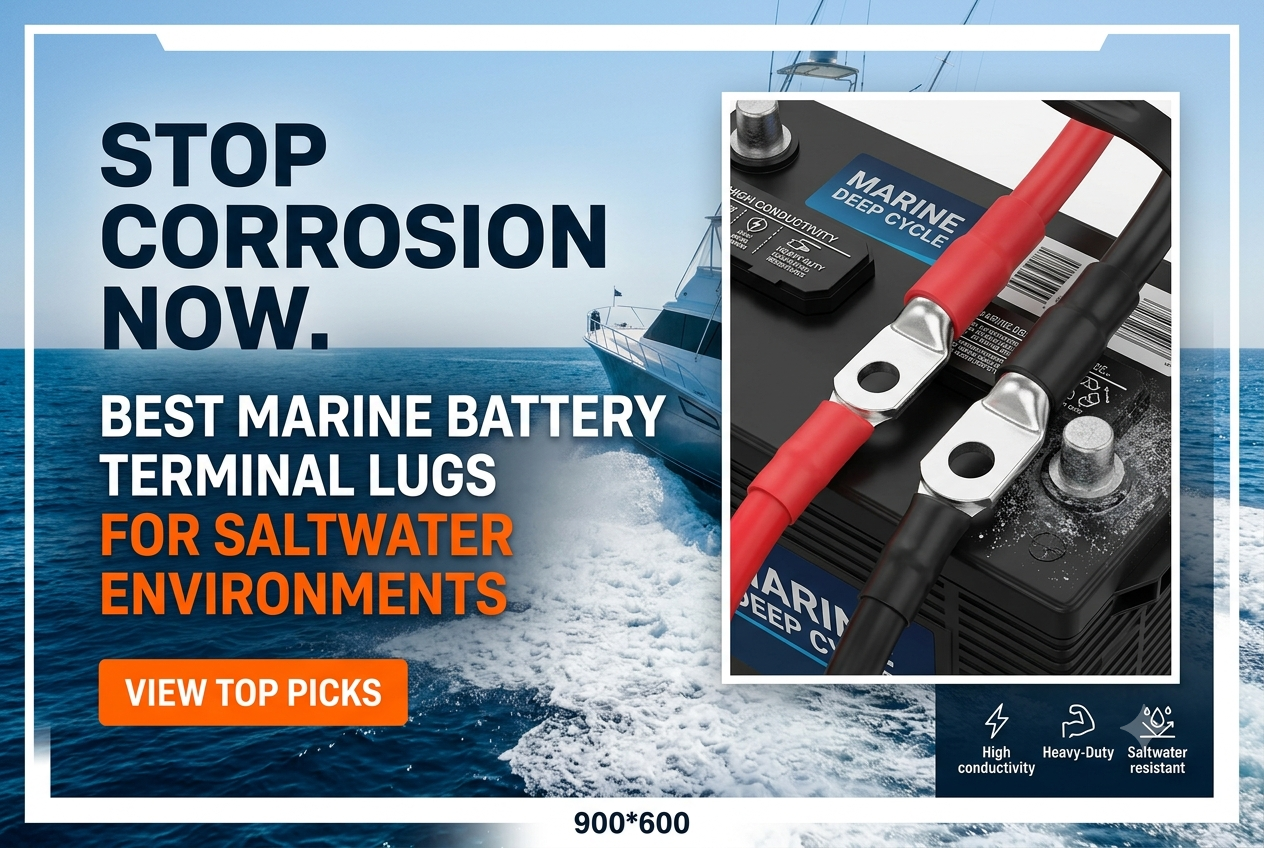
Navigating a vessel in saltwater environments introduces one of the harshest physical challenges for onboard electrical systems. The combination of moisture, oxygen, and high salinity creates a highly corrosive cocktail that can rapidly degrade standard electrical connections. When corrosion attacks your battery terminals, it increases electrical resistance, causes voltage drops, and can ultimately lead to total power failure miles offshore. Ensuring a reliable electrical system starts with selecting the right Battery Terminal Lugs.
To combat this aggressive environment, many marine electricians turn to bare copper lugs as the foundational building block for robust, long-lasting wiring harnesses. However, not all lugs are created equal. Understanding which materials, platings, and sealing methods perform best in saltwater will save you from costly repairs and dangerous breakdowns on the water.
The Corrosion Culprit: Why Saltwater Demands Specialized Lugs
Saltwater acts as a powerful electrolyte. When it comes into contact with dissimilar metals used in standard electrical wiring, it accelerates galvanic corrosion. Furthermore, copper itself oxidizes quickly when exposed to air and moisture. In a marine environment, an unprotected connection will turn green, pit, and eventually disintegrate.
To prevent this, marine-grade lugs must provide a superior barrier against moisture ingress while maintaining excellent conductivity. The standard approach involves using heavy-duty, thick-walled connectors that can be crimped with immense pressure to form a gas-tight seal, preventing saltwater from ever reaching the conductive core of the wire.
Top Material Choices for Marine Terminals
When outfitting a boat, you generally have three main material categories to choose from for your terminal connections:
1. Tinned Copper Lugs
Tinned copper is widely considered the gold standard for marine applications. These lugs start as high-grade copper for maximum conductivity but are electroplated with a protective layer of tin. The tin coating acts as a sacrificial barrier against saltwater corrosion, preventing the underlying copper from oxidizing or turning green. Even if the tin layer suffers minor scratches, the galvanic compatibility between the metals protects the integrity of the connection.
2. Bare Copper Lugs
While tinned copper is preferred, unplated bare copper lugs are frequently used in specific, tightly controlled marine applications. Because copper is an exceptional conductor, bare copper provides maximum current flow with minimal resistance. However, to use them safely in saltwater environments, they must be completely encapsulated. Installers typically use adhesive-lined heat shrink tubing over the entire crimp and connection point to ensure absolutely no oxygen or saltwater can reach the metal.
3. Stainless Steel and Brass
Stainless steel and brass offer excellent mechanical strength and corrosion resistance, but they suffer from significantly higher electrical resistance compared to copper. For this reason, they are usually reserved for battery studs, distribution posts, or specialized terminal studs rather than the primary cable lugs themselves.
Key Features to Look For
Selecting the right lug goes beyond just the base metal. Keep these critical design features in mind when shopping for marine electrical components:
- Closed-End Design: Always opt for closed-end lugs rather than open-barrel designs. A closed end prevents moisture from wicking up the strands of the marine wire from the exposed end.
- Heavy-Duty Wall Thickness: Thin automotive-style lugs will not hold up to the heavy crimping pressures required in marine setups. Thick-walled lugs allow for a deeper, more secure crimp that compresses the wire strands into a solid mass.
- Flared Ends: A flared barrel entry makes it much easier to insert fine-stranded marine wire without fraying or bending the individual strands.
- UL/Marine Certifications: Look for components that meet ABYC (American Boat and Yacht Council) and UL 486A standards for safety and reliability under heavy vibration and thermal stress.
Proper Installation Techniques: The Secret to Longevity
Even the highest quality marine lugs will fail if installed incorrectly. The marine environment punishes shortcuts, so adhering to best practices during your installation is non-negotiable.
1. Strip and Clean
Strip the insulation from your marine cable to reveal bright, shiny copper strands. If the wire is older and shows signs of dulling or blackening, clean it thoroughly before termination.
2. Use the Right Crimper
Never use standard household pliers or cheap crimpers to secure heavy-gauge battery cables. Use a dedicated heavy-duty mechanical or hydraulic crimper that applies uniform, crushing force. This deforms the lug and the wire strands together into a single, cohesive unit, squeezing out any air gaps where corrosion could start.
3. Seal with Adhesive-Lined Heat Shrink
This is the most critical step for long-term survival in saltwater. Slide a piece of adhesive-lined, dual-wall polyolefin heat shrink tubing over the connection. When heat is applied, the tubing shrinks tightly around the cable and lug, while the inner adhesive melts and flows to create a watertight, environmental seal.
Maintenance and Inspection
Prevention is far cheaper than recovery at sea. Even with the best materials, routine inspections should be part of your vessel maintenance checklist. At least twice a year—ideally at the beginning and end of the boating season—inspect your battery banks carefully.
Look for any signs of white powdery deposits, green crusting, or swelling beneath the heat shrink tubing. Wiggle the cables to ensure there is no mechanical play or loose connections. A secure, well-protected terminal should look exactly as it did on the day it was installed, providing reliable power to your boat’s electronics, navigation systems, and starter motor.
Final Verdict: Making Your Selection
For the ultimate peace of mind in harsh marine conditions, quality Battery Terminal Lugs are non-negotiable. While bare copper lugs can work effectively when perfectly sealed with marine-grade adhesive heat shrink, factory-tinned copper lugs provide an extra layer of built-in defense against the inevitable intrusion of moisture and salt. Prioritizing thick-walled, tinned components coupled with rigorous hydraulic crimping and heat-sealing will ensure your electrical system remains safe, efficient, and corrosion-free for years to come.